One Month of Free Litecoin Claims Taught Me More About Crypto Than Any Textbook Ever Could
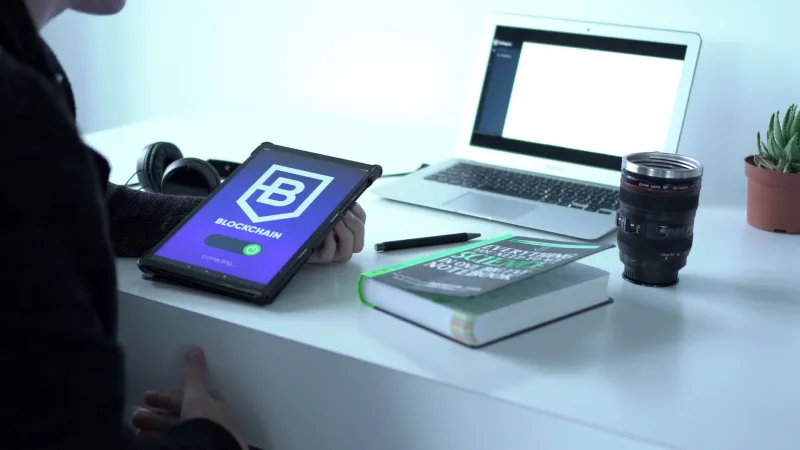
Let's be honest. Most people who try to learn crypto the "right" way end up buried in YouTube rabbit holes, Reddit threads, and glossary pages that define one confusing term using three other confusing terms. You read about wallets for an hour and still aren't sure what a private key actually does. You watch an explainer video on blockchain confirmations and nod along, then immediately forget everything.
Here's the thing nobody talks about: the fastest way to actually learn this stuff isn't reading about it. It's doing it — with real stakes, however small.
That's exactly what happens when you start claiming free Litecoin through a faucet. In your first month alone, you'll absorb more practical crypto knowledge than most finance courses ever bother to cover. Not because the lessons are handed to you. Because you need them to make things work.
Your Wallet Address Is Your First Real Lesson
Before you claim a single fraction of Litecoin, you need somewhere to send it. That means setting up a wallet and coming face-to-face with your first wallet address — a long, intimidating string of letters and numbers that looks like it was generated by a robot having a very specific kind of dream.
At first, it feels arbitrary. But the moment you copy that address, paste it into a faucet form, and successfully receive your first reward, something clicks. That address isn't random noise. It's yours. It's a unique identifier tied to your spot on the Litecoin network, and nobody else in the world has one exactly like it.
You also learn quickly — usually from a near-miss — that addresses are case-sensitive and completely unforgiving. Mess up one character and your coins go nowhere, or worse, somewhere you didn't intend. That lesson in precision sticks in a way that no textbook definition of "public key" ever could.
Transaction Confirmations Become Personal
After your first claim, you'll probably check your wallet balance about forty times in the next ten minutes. It won't update immediately. That waiting period introduces you to one of the most fundamental concepts in blockchain: transaction confirmations.
The Litecoin network needs to verify your transaction by bundling it into a block and adding it to the chain. That takes a little time. Once you've experienced that wait firsthand — refreshing, wondering, then finally seeing the balance update — you understand confirmations on a gut level. You get why they matter for security. You understand why merchants sometimes require multiple confirmations before releasing a purchase.
This is stuff that takes students in a university finance class multiple lectures to fully grasp. You figured it out because you were impatient about a small faucet reward.
Network Fees Stop Being Abstract
Here's a concept that trips up a lot of beginners in theory: transaction fees. Why do they exist? Who gets them? Why do they change?
When you eventually move your accumulated Litecoin — maybe to a different wallet, maybe to an exchange — you'll see a small fee deducted from your balance. And suddenly, fees aren't abstract anymore. They're coming out of your coins.
That personal stake makes you curious. You look into why fees exist (miners need to be compensated for processing transactions), why Litecoin's fees tend to be lower than Bitcoin's (faster block times, different design priorities), and how network congestion can push fees up or down. Without even trying, you've just taught yourself a meaningful chunk of blockchain economics.
One tiny deduction. Lessons that would take a semester to cover in a classroom.
Security Practices Become Habits, Not Homework
In a theoretical setting, security advice sounds like a checklist nobody actually follows. Back up your seed phrase. Don't store large amounts on exchanges. Use two-factor authentication. Sure, sure — noted.
But when you've spent real time building up a balance, even a modest one, your relationship with security changes completely. You want to back up your seed phrase because you've put in the effort to earn those coins. You actually set up 2FA because the idea of losing access to your wallet goes from hypothetical to genuinely upsetting.
The faucet experience creates low-stakes ownership — and low-stakes ownership creates high-stakes habits. By the time you're managing real money in crypto, the security fundamentals are already second nature.
You Start Reading Price Charts Without Trying
Spend a month watching your faucet balance fluctuate in dollar value — even by a few cents — and you'll naturally start paying attention to Litecoin's price. You'll notice when it dips. You'll notice when it spikes. You'll start wondering why.
That curiosity leads you to market cap basics, trading volume, the relationship between Bitcoin's price movements and altcoin behavior. None of this was assigned. You just got curious because you had skin in the game.
This is how financial literacy actually develops in the real world — not from mandatory reading, but from personal relevance. When it's your balance on the screen, even a small one, the numbers mean something.
The Compounding Effect of Hands-On Learning
Here's what makes the faucet classroom so effective: every new concept connects to an action you've already taken. Confirmations aren't abstract — you waited for them. Fees aren't theoretical — you paid one. Wallet security isn't a lecture slide — it's the thing standing between you and the coins you earned.
This is called experiential learning, and it's been shown repeatedly to outperform passive instruction for long-term retention. Finance professors know this. Business schools spend a lot of money trying to simulate it with case studies and mock portfolios. You're getting the real version for free.
A traditional finance degree will teach you portfolio theory, risk management, maybe a unit on digital assets if you're lucky. What it almost certainly won't give you is the hands-on experience of actually using a blockchain network — navigating real wallets, sending real transactions, watching real confirmations roll in.
What the Second Month Looks Like
By the time you've been at it for 30 days, you're not a beginner in the same way you were on day one. You've got a working wallet. You understand how faucets pay out and why. You've sent at least one transaction and watched it confirm. You've probably looked up a few things out of genuine curiosity.
Most importantly, you've built a foundation that makes every future crypto concept easier to understand. When someone mentions gas fees, you get the analogy immediately. When a friend asks about keeping crypto safe, you actually have something useful to say.
All of that happened because you showed up, claimed some free Litecoin, and paid attention to what was happening on your screen.
That's not a bad return on a month of small habits.